
What happens from the police report to the judgment, the time limits set by law and what a plea agreement means, whether you reported or have been reported.

More than 7,100 women in the province have an active VioGén case. We explain the risk levels, the measures for each and what to do if yours does not reflect your situation.

Arrest or summons, fast-track trial and protection order: what happens after the complaint, your rights and the mistakes to avoid in the first few hours.

Everything about electronic devices for monitoring restraining orders: legal basis, how they work, the accused’s obligations and what is known about their failures.

What you can ask your employer for if you are a victim of gender violence, how to prove your situation and what benefits you are entitled to, including if you are self-employed or a civil servant.

The legal concept, warning signs and measures to protect your children under current law, and what the bill going through the Spanish Congress would change.

What happens to Organic Law 1/2004 when the accused rectifies their registered sex: the text of the law, court decisions and the perspectives of the victim and the person under investigation.

Official data from the Government Delegation against Gender Violence, what counts as femicide in Spain and which signs make it possible to act in time.

Requirements, how the amounts are calculated and where to apply for national and Valencian Region aid, with or without a prior police complaint.

An up-to-date guide to art. 544 ter LECrim: who can apply for a protection order, what measures it includes, how long they last and what happens if it is breached.
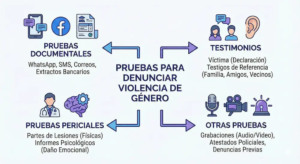
How much weight your statement carries, what evidence strengthens it and how to keep messages, recordings and reports without putting yourself at risk.

Learn to recognise guilt, control and isolation, tell them apart from a normal argument and know when the law punishes them.

What the Criminal Code punishes, how to stop your intimate images from spreading and what the accused person should also know.

The violence that leaves no visible marks but normalises inequality: the concept, everyday examples, the legal framework and its impact on court practice.

If he makes you doubt your memory and your judgement, it may be gaslighting. We explain how to recognise it, when it has criminal consequences and how to gather evidence.

Pressuring, blackmailing or intimidating someone to obtain a sexual act is an offence. We explain what the Criminal Code says today, how to report it and how long you have.

A rigorous defence guide: your rights from the moment of arrest, the mistakes you must not make, how exculpatory evidence is built and what the offence of false reporting requires.

Calls, waiting outside, messages from new profiles or the children used as messengers: harassment by an ex-partner is a criminal offence. We explain how to document it and protect yourself.

Phone control, jealousy and harassment on social media: how to recognise violence in teenage relationships and what legal response exists for victims and young abusers.

Anxiety, post-traumatic stress or insomnia can last for years. We explain how they are assessed in court, how they are compensated and where to get free support.

Controlling money is also violence. We explain what conduct the Criminal Code punishes, how to gather evidence and which civil measures help you regain your independence.