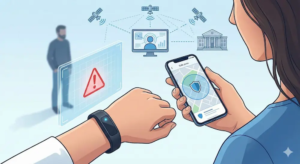




After a gender violence complaint, the police assess your risk in the VioGén system and assign you a level: low, medium, high or extreme. The “not detected” (no apreciado) level was abolished by the 2025 Protocol. Each level comes with specific police measures. If you believe your level does not reflect your situation, you can provide new facts and reports so that it is reassessed, and your lawyer can ask the court to request a new assessment and a protection order (art. 544 ter of the Criminal Procedure Act, LECrim).
Your VioGén risk level determines how much police protection you will receive after reporting. According to figures published on 2 October 2026, more than 7,100 women in the province of Alicante have an active case in the system. If you are one of them, here we explain what your level means and what you can do if it does not match what you are going through.
VioGén in Alicante: the October 2026 figures
As reported by El Español on 2 October 2026, based on the Ministry of Equality’s report, the province of Alicante has 7,121 active VioGén cases and 49,913 inactive ones. It is the province with the third-highest number of cases, after Madrid (12,881) and Valencia (7,739). This is how active cases break down by level:
| Risk level | Active cases in the province of Alicante |
|---|---|
| Low | 5,709 |
| Medium | 1,305 |
| High | 105 |
| Extreme | 2 |
| Total active | 7,121 |
The same report records 108 active cases involving teenagers under 18. The article does not state the cut-off date for the figures.
What VioGén 2 is and what changed with the 2025 Protocol
VioGén is the Ministry of the Interior’s Comprehensive Monitoring System for Gender Violence Cases (Sistema de Seguimiento Integral en los casos de Violencia de Género), in operation since 2007. It is used to assess each victim’s risk and organise her protection.
On 15 January 2025, the Ministry of the Interior presented VioGén 2 and a new police protocol, set out in Instruction 1/2025 of the Secretary of State for Security (Secretaría de Estado de Seguridad), in effect since 30 June 2025. The changes that affect you most:
- The “not detected” level has gone. All cases are now classified into four levels: low, medium, high and extreme. The low level is subdivided internally depending on whether court measures are in force.
- New indicators in the assessment forms and a recalibrated algorithm.
- Longer monitoring for high risk, and sections for minors, repeat offenders and cyberviolence.
What the press calls “VioGén 2.0” is the upgrade that the Crímina Centre at Miguel Hernández University of Elche has been working on in 2026 for the Secretary of State for Security: recalibrating the algorithm, improving the forms and studying artificial intelligence. According to its director, it will be for the Secretary of State to decide how to incorporate these changes, and an algorithm never decides on its own.
How your level is calculated: VPR and VPER
The initial assessment (VPR)
When you report, officers complete the Police Risk Assessment form (Valoración Policial del Riesgo, VPR) with your account and the police information available. The system suggests a level, but the protocol allows officers to change it when they have information that justifies doing so. The report is added to the police report (atestado) that goes to the court.
Periodic reviews (VPER)
Next come the risk evolution assessments (Valoración Policial de Evolución del Riesgo, VPER). For medium, high and extreme levels, the first is carried out after the first court hearing and, in any event, within 15 days of the VPR at most. If the case progresses without incidents, the following ones take place within these time limits:
| Level | Next review (VPER) |
|---|---|
| Extreme | Within 72 hours |
| High | Within 7 days |
| Medium | Within 30 days |
| Low with court measures | Within 60 days |
| Low without court measures | Within 90 days |
If there is a new complaint or a breach, there is no waiting for the deadline: a new full VPR is carried out.
The police measures that come with each level
Annex II of the protocol sets mandatory measures for each level, which are added to those of the lower levels:
| Level | Main measures |
|---|---|
| Low | 24-hour telephone number for the police unit, information on remote assistance and the AlertCops app, referral to victim support and social services, self-protection and cybersecurity guidance, and discreet periodic contact. |
| Medium | Personal interview, occasional and random patrols at home, work and schools, accompaniment to appointments and formalities, and periodic checks that the aggressor is complying with court measures. |
| High | Possible move to a relative’s home or a refuge if the aggressor cannot be located, frequent monitoring of his movements and a request to the Public Prosecutor’s Office for an electronic monitoring device. |
| Extreme | Permanent, in-person police protection, patrols at the children’s schools and intensive monitoring of the aggressor’s movements. |
The police must agree a Personalised Safety Plan (Plan de Seguridad Personalizado) with you.
Risk level, protection order and electronic tags
The risk level is a police assessment; the protection order is a court decision. The judge grants it when there is well-founded evidence of an offence and an objective risk to you (art. 544 ter LECrim), and the VioGén report is one of the factors taken into account, but not the only one. A low level does not prevent you from obtaining one if the evidence justifies it. We explain this in our guide to the protection order in gender violence cases.
Electronic tags are also ordered by the judge, when imposing a restraining order (art. 64.3 of the Gender Violence Act, LO 1/2004). For high risk, and for medium risk in particularly significant cases, the protocol provides for the police to ask the Public Prosecutor’s Office to request this electronic monitoring. If you want to know how they work, read everything you need to know about anti-abuse tags and our page on restraining orders in gender violence cases.
What to do if your level does not reflect your situation
The protocol does not provide for a formal appeal against the level assigned. It does provide for reassessment when there is new information or when the court or the Public Prosecutor’s Office requests it:
- Ask for your level to be explained to you. You have the right to know it and to know which indicators determined it.
- Give your police unit any new facts. Messages, threats, being followed, his having weapons or a record that was not on file. The protocol requires a new assessment whenever information is gathered that may affect the risk.
- Report every incident. A new complaint or a breach requires a full VPR, not just a review.
- Gather reports. Medical reports, psychological reports, reports from the Women’s Centre (Centro Mujer) or social services, and witnesses help the assessment reflect what you are going through. Our evidence guide for gender violence cases will point you in the right direction.
- Act through the court. Your lawyer can ask the Gender Violence Section (Sección de Violencia sobre la Mujer) to request a new police assessment and, if necessary, a protection order or an extension of it.
Important: if you voluntarily, expressly and repeatedly decline police protection in a low or medium risk case with no court measures in force, the case may be made inactive. Before taking that step, talk to your lawyer or to specialist services. An inactive case is reactivated if there is a new complaint or a breach.
Your risk level in Alicante: how we handle it
In Alicante, your case is managed by the specialist National Police or Guardia Civil unit covering your home address, and the court proceedings are handled by the Gender Violence Section of the Court of First Instance (Tribunal de Instancia), which in the city of Alicante is located at Avenida de Aguilera, 53, according to the directory of the General Council of the Judiciary (Consejo General del Poder Judicial). Save the 24-hour number the officers give you: it is your direct line for reporting any developments.
Celeste Pérez Bleda supports women victims from the moment they report. We review the police report with you, prepare the protection order hearing and, if the situation changes, ask the court to act. Our team will assist you in English.
Frequently asked questions
Can I find out what VioGén risk level I have?
Yes. The police protocol requires your risk level to be communicated to you by a means that leaves a record, together with the most important indicators in your case and the specific dangers you face. They must also explain that the level may change over time. If you have not been told, ask the police unit handling your case.
What happened to the “not detected” level?
It was abolished by the 2025 Protocol, approved by Instruction 1/2025 of the Secretary of State for Security and in effect since 30 June 2025. Since then, all cases have been classified into four levels: low, medium, high and extreme. The low level is managed differently depending on whether court measures are in force.
How often is my risk level reviewed?
It depends on the level. If there are no incidents, the police must review it within 72 hours for extreme risk, 7 days for high, 30 days for medium and 60 or 90 days for low, depending on whether there are court measures. If there is a new complaint or a breach, a new full assessment (VPR) is carried out. It is also reviewed when you provide new information or the court requests it.
If my risk is low, can I be granted a protection order?
Yes. The protection order is decided by the judge and requires well-founded evidence of an offence and an objective risk, under article 544 ter of the Criminal Procedure Act. The police risk report is an important factor, but the judge also weighs your statement, the witnesses, the medical reports and the rest of the evidence.
Is the risk level communicated to the court?
The initial assessment report is added to the police file that goes to the court. For later reviews, the protocol provides that the result is communicated individually to the judicial authority and the Public Prosecutor’s Office only when the level goes up. If your situation gets worse, your lawyer can inform the court directly.
If you feel your risk level does not reflect what you are going through, you do not have to deal with it alone: we review your case and make sure the court receives whatever is needed. Our team will assist you in English. Find out how we work in representing women who are victims of gender violence or call us on 607 449 491, 24 hours a day, also on WhatsApp.
Public support services
- ATENPRO: a support and protection service with a mobile phone, available 24 hours, for victims who do not live with the aggressor, among other requirements. You apply through your town hall’s social services.
Legal basis and sources
- El Español, 02/10/2026: VioGén 2.0 in Alicante
- Ministry of the Interior: VioGén 2 and 2025 Protocol (15/01/2025)
- Ministry of the Interior: 2025 Protocol (26/06/2025)
- Instruction 1/2025 of the Secretary of State for Security
- El Español, 31/05/2026: Crímina-UMH and VioGén 2.0
- Criminal Procedure Act (art. 544 ter)
- LO 1/2004 on Comprehensive Protection against Gender Violence (art. 64)
- Ministry of Equality: ATENPRO
- GVA: Alicante 24-hour Women’s Centre
- CGPJ: Alicante Gender Violence Section