



According to the Government Delegation against Gender Violence, 1,382 women have been killed by their partners or ex-partners in Spain since 2003, 41 of them in 2026 (data as at 29 September 2026) and 48 in 2025. In 2026, seven out of ten victims had not reported their abuser. Separation, threats and escalating control are risk signs that make it possible to act in time.
Behind every figure there is a woman, a family and, often, children left without a mother. Understanding the official data is not a statistical exercise: it helps to recognise the moments of greatest danger and to know what tools exist to stop a violent situation from ending in something irreparable. All the data in this article come from official sources and were consulted on 3 October 2026.
What counts as femicide in Spain
The Government Delegation against Gender Violence (Delegación del Gobierno contra la Violencia de Género, part of the Ministry of Equality) defines femicide (feminicidio) as the killing of a woman on grounds of gender and distinguishes several categories:
- Femicide by a partner or ex-partner: the type covered by Organic Law 1/2004. It has been recorded since 1 January 2003.
- Family femicide: committed by men in the family circle other than the partner (including so-called honour crimes).
- Sexual femicide: linked to sexual violence, trafficking for sexual exploitation, prostitution, female genital mutilation or forced marriage.
- Social femicide: a non-sexual attack by a man with no partner or family relationship to the victim (a neighbour, a colleague, an acquaintance or a stranger).
- Vicarious femicide: the killing of an adult woman by a man as a means of harming another woman.
Femicides outside the couple have been officially recorded since January 2022 and are published every six months. That is why a total figure for femicides can only be given from that year onwards.
In the Criminal Code (Código Penal), “femicide” is not a separate offence: these acts are tried as homicide or murder, with the aggravating circumstance of having been committed on grounds of gender (art. 22.4 CP) and, where applicable, that of kinship (art. 23 CP).
Official figures on fatal victims
Femicides by a partner or ex-partner
| Period | Women killed | Source and date |
|---|---|---|
| 2003 to 29/09/2026 | 1,382 | 2026 statistical sheet, updated to 29/09/2026 |
| Year 2026 (to 29/09) | 41 | 2026 statistical sheet, updated to 29/09/2026 |
| Year 2025 (full year) | 48 | 2025 statistical sheet, updated to 23/04/2026 (with 2 cases still under investigation) |
All these data are provisional: the Delegation reviews cases as they are confirmed or ruled out.
What the 2026 data reveal
The 2026 sheet, updated to 29 September, provides data that are particularly useful for prevention:
- 23 of the 41 victims (56.1%) were killed by their ex-partner or by a partner during a break-up.
- 29 victims (70.7%) had not previously reported the abuser; 12 (29.3%) had.
- In 7 cases there were restraining measures in force that the alleged abuser breached.
- 29 children under 18 have lost their mothers to these crimes so far this year.
- The Valencian Community has recorded 6 victims in 2026, the region with the second-highest number of cases after Andalusia.
- In 9 cases the alleged abuser took his own life after the crime.
For 2025, the sheet updated to 23 April 2026 records 41 children left motherless and 4 victims in the Valencian Community. In addition, according to the December 2025 key data report, three children were killed that year as a result of violence by their mother’s partner or ex-partner.
Femicides outside the couple
According to the sheet on other femicides updated to 31 March 2026, 26 femicides outside the partner or ex-partner relationship were recorded in 2025, and 101 between January 2022 and December 2025. In 2025, half of those victims (13) were killed by a son or grandson.
Important: the fact that most of the women killed had not reported their abuser does not mean that reporting is pointless. It means that many risk situations never come to the attention of the authorities. If you or someone close to you is experiencing violence, 016 (24 hours, free, leaves no trace on the phone bill) and 112 in case of immediate danger are the first step.
Causes and risk factors
Femicide within a couple is almost never an isolated outburst. It is usually the end of a process of control and violence, often psychological, that intensifies. Behind it there is also a cultural basis of inequality, which we explain in our article on symbolic violence. Official data and practical experience agree on several high-risk moments and signs:
- Separation or the decision to break up. In 2026, more than half of the victims were killed by their ex-partner or in the middle of a break-up.
- Escalating control: monitoring the phone, following, turning up unexpectedly at work or at home. We explain this in post-separation harassment.
- Threats of death or suicide by the abuser, and threats directed at the children.
- Breaches of restraining orders, which show that the abuser does not accept legal limits.
- Extreme jealousy, access to weapons, alcohol or drug use and increasingly serious assaults.
Many of these signs appear long before. Knowing them helps you act in time: read our guide on how to identify the early warning signs of gender violence.
The VioGén system
When a woman files a complaint, the police assess the risk using the Comprehensive Monitoring System for Gender Violence Cases (Sistema de Seguimiento Integral en los casos de Violencia de Género, VioGén) of the Ministry of the Interior. Officers complete a Police Risk Assessment form (Valoración Policial del Riesgo, VPR) and, later, periodic assessments of how the risk is evolving (VPER). Since 2025 the VioGén 2 platform has been in operation which, according to the Ministry of the Interior, incorporates new indicators, calibrates the algorithms better and classifies risk into four levels: low, medium, high and extreme. Police protection measures depend on that level.
That is why, when you file a complaint, it is important to report all the relevant facts, even if they seem minor to you: threats, jealousy, controlling behaviour, access to weapons or recent changes in his behaviour.
How to prevent it: protection tools
- Complaint and risk assessment. These trigger police protection and VioGén monitoring.
- Protection order (art. 544 ter of the Criminal Procedure Act (Ley de Enjuiciamiento Criminal, LECrim)). The court must hold an urgent hearing within a maximum of 72 hours and can order a restraining order, a ban on communication, removal from the home and measures concerning the children. More information in our guide to the protection order (orden de protección).
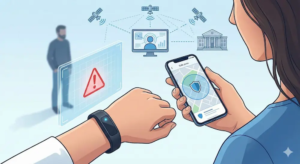
- Electronic monitoring devices. Monitoring bracelets make it possible to detect whether the abuser is approaching. According to the Government Delegation, there were 4,412 active devices as at 31 December 2025.
- ATENPRO. A telephone support and protection service that allows the victim to contact a support centre at any time.
- Breaching an order is an offence. Breaching a restraining order (orden de alejamiento) in a gender violence case is punishable by six months to one year in prison (art. 468.2 CP), even if the victim consents to the contact.
Resources in Alicante and the Valencian Community
- 016: telephone, WhatsApp 600 000 016, chat and email 016-online@igualdad.gob.es. Free, 24 hours, in dozens of languages.
- Centro Mujer 24 Horas in Alicante (24-hour women’s centre): calle García Andreu, 12. Free psychological, social and legal support. Telephone 900 580 888.
- 112, 091 (National Police) and 062 (Guardia Civil) in case of any danger.
Frequently asked questions
How many women have been killed by gender violence in 2026?
According to the statistical sheet of the Government Delegation against Gender Violence updated to 29 September 2026, 41 women have been killed by their partners or ex-partners in Spain in 2026. Since 2003, the total stands at 1,382. These are provisional data that are updated every time a case is confirmed or ruled out.
What is the difference between femicide and gender violence?
In Spain, gender violence in the legal sense is violence by a man against a woman who is or was his partner (Organic Law 1/2004). Femicide is the killing of a woman on grounds of gender and is broader: it includes killings by a partner or ex-partner and, since 2022, also family, sexual, social and vicarious femicides, which are counted separately.
When is a victim at greatest risk?
Official data point to separation as a critical moment: in 2026, 56.1% of the women killed died at the hands of their ex-partner or of a partner during a break-up. Death threats, breaches of restraining orders and escalating jealousy and control are also warning signs. Planning the break-up with professional support reduces the risks.
Why are femicides outside the couple counted separately?
Because Organic Law 1/2004 only covers violence within the couple, which has been recorded since 2003. Since January 2022, the Government Delegation has also recorded family, sexual, social and vicarious femicides. Confirming them takes longer, so they are published every six months and are only comparable with partner femicides from that year onwards.
If you recognise any of these signs in your life or in the life of someone close to you, getting advice in time can make the difference. Celeste Pérez Bleda helps you assess your situation and apply for the appropriate protection measures through her services of defending women who are victims of gender violence and restraining orders. You can call 607 449 491, available 24 hours a day.
Legal basis and sources
- Government Delegation against Gender Violence: fatal victims statistical sheets (consulted 3/10/2026) (in Spanish)
- Statistical sheet on fatal victims 2026, updated to 29/09/2026 (in Spanish)
- Statistical sheet on fatal victims 2025, updated to 23/04/2026 (in Spanish)
- Sheet on femicides outside the partner or ex-partner relationship 2025, updated to 31/03/2026 (in Spanish)
- Government Delegation: methodological notes on femicides (in Spanish)
- Key data on gender violence, December 2025 (in Spanish)
- Ministry of the Interior: new police response model, VioGén 2 (in Spanish)
- Organic Law 1/2004 on Comprehensive Protection Measures against Gender Violence (BOE, in Spanish)
- Criminal Code (arts. 22, 23 and 468), consolidated text (BOE, in Spanish)