


The early warning signs of gender violence usually appear before any blow: control over what you do and who you talk to, isolation from your family and friends, jealousy presented as love, constant put-downs, control of money and monitoring of your phone or social media. If you recognise several of them, you can call 016 (free, 24 hours, leaves no trace on your phone bill) and speak to a lawyer before deciding anything.
Gender violence almost never begins with a physical assault. It begins with small gestures that, on their own, seem normal or even flattering, and that little by little reduce your freedom. Spotting them early is the best way to protect yourself. This guide helps you put a name to them, understand why it is so hard to leave and know what resources are available to you in Alicante.
Why it matters to spot the signs in time
The Ministry of Equality’s 2024 Macro-survey on Violence against Women (Macroencuesta de Violencia contra la Mujer 2024), published in December 2025, shows that controlling behaviour is the most widespread form: 25.1% of women living in Spain have suffered it at the hands of a partner, and 20.9% have experienced emotional psychological violence. The same survey indicates that psychological or economic violence is present in 95.6% of relationships in which there is physical or sexual violence.
In other words, control and contempt are often the prelude to physical violence. And there is an encouraging finding: according to that macro-survey, 73.3% of women who reported or sought help, whether formal or from those around them, for violence from a past partner ended the relationship, compared with 43% of those who spoke to no one. Asking for help works.
The warning signs, one by one
Control of your daily life
- He wants to know at all times where you are, who you are with and what time you will be back.
- He decides how you dress, what you eat or how you spend your free time.
- He gets angry if you make decisions without consulting him, even when they are yours to make.
Isolation
- He criticises your family and friends or stirs up conflict so that you stop seeing them.
- He makes you feel guilty for spending time without him.
- He pressures you to move house, leave your job or give up your studies.
Jealousy presented as love
- He interprets any conversation with another person as a betrayal.
- He accuses you of being unfaithful for no reason and makes you explain yourself.
- Phrases such as “I do it because I love you” or “if I didn’t care about you, I wouldn’t get like this”.
Belittling and humiliation
- Hurtful jokes, often in front of other people.
- Constant comments about your body, your intelligence or your personality.
- He makes you doubt your memory or your perception (“that never happened”, “you’re crazy”). This is what is known as gaslighting.
Financial control
- He manages all the money and makes you ask him for what you need.
- He prevents you from working or demands that you justify every expense.
- He uses your cards or takes on debts in your name.
This is a form of violence recognised in the Istanbul Convention and in Valencian Law 7/2012. We explain it in depth in economic abuse: what it is and how to report it.
Digital control
- He demands the passwords to your phone or social media, or checks your messages.
- He tracks your location constantly or installs tracking apps.
- He messages you insistently if you do not reply straight away.
- He threatens to share intimate photos or conversations.
Some of these behaviours, as well as being warning signs, may be criminal offences: accessing your messages without consent may amount to the offence of discovery and disclosure of secrets (art. 197 CP), and surveillance or persistent contact that disrupts your daily life may amount to the offence of stalking (art. 172 ter CP), which carries a heavier penalty when the perpetrator is a partner or former partner. If this is happening to you, see our page on cyberviolence and online harassment.
Intimidation
- He breaks things, punches walls or drives recklessly to frighten you.
- He threatens to harm himself, to take your children away from you or to hurt your pets.
- You feel you have to “be careful” about what you say so as not to make him angry.
Important: you do not need to live together or be married. Organic Law 1/2004 (Ley Orgánica 1/2004) protects women against violence from anyone who is or has been their partner, “even without cohabitation”. A boyfriend you have never lived with or an ex-partner from years ago are also included. If you are very young or have a teenage daughter, read gender violence among teenagers.
The cycle of violence: why it is so hard to leave
In 1979 the psychologist Lenore Walker described a pattern that repeats itself in many violent relationships and helps to explain why it is not easy to leave:
- Tension building. Reproaches, silences and irritability increase. You try to avoid conflict by going along with everything.
- Explosion. The violent episode occurs: shouting, insults, threats, blows or sexual assault.
- Remorse or “honeymoon”. He apologises, promises to change and becomes affectionate. Hope returns that everything will go back to how it was at the beginning.
Over time, the remorse phase becomes shorter or disappears and the episodes become more frequent and more intense. If you feel trapped in this cycle, it is not because you lack strength of character: it is the effect of a manipulation mechanism that you can learn to identify in how to spot emotional manipulation.
Where to ask for help
| Resource | What it offers | How to get in touch |
|---|---|---|
| 016 | Information, legal advice and psychosocial support for all forms of violence against women. Free, confidential, 24 hours, in 53 languages. Leaves no trace on your phone bill | Phone 016, WhatsApp 600 000 016, email 016-online@igualdad.gob.es or online chat |
| Emergencies | If you are in immediate danger | 112, National Police (091) or Guardia Civil (062) |
| Centro Mujer 24 Horas, Alicante | Comprehensive specialist support from the Valencian regional government (Generalitat Valenciana), with legal and psychological advice | Freephone 900 58 08 88 |
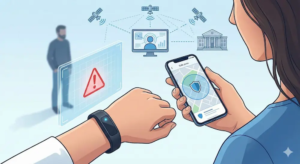
| ATENPRO | Mobile support and protection device available 24 hours a day, 365 days a year, with geolocation | Social services at your local council |
To access ATENPRO, according to the Ministry of Equality, you must not be living with the person who has abused you and must take part in the specialist support programmes of your autonomous region. You are not required to have filed a complaint.
When to consult a lawyer
You do not have to wait for a serious assault or have decided whether you are going to report. It is a good time for a consultation when:
- You recognise several of the signs above and want to know whether what you are going through may be a criminal offence.
- You are thinking of separating and fear your partner’s reaction.
- You have children together and are worried about custody or contact.
- You want to start keeping evidence (messages, audio recordings, medical reports) in a safe and useful way.
- You need urgent protection: a protection order (orden de protección) can include a restraining order and measures concerning the home and the children.
A consultation is confidential and does not commit you to anything. It lets you know your options before taking any step, including how restraining orders (órdenes de alejamiento) work.
Frequently asked questions
What are the first signs of gender violence?
The most common are control of your schedule and relationships, isolation from family and friends, excessive jealousy presented as love, humiliation and hurtful jokes, control of money and monitoring of your phone or social media. They usually appear gradually and before physical violence, so identifying them early allows you to ask for help in time.
Is jealousy a sign of abuse?
Occasional jealousy is a human emotion. It becomes a warning sign when it is used to control you: he forbids you to see certain people, checks your phone, accuses you without reason or makes you justify your every move. If jealousy limits your freedom or makes you afraid, it is not proof of love but a form of control that should be taken seriously. The fact that control is so often mistaken for love has a great deal to do with the stereotypes we analyse in symbolic violence.
Does calling 016 leave a trace on my phone bill?
No. 016 is a free and confidential service run by the Ministry of Equality that does not appear on your phone bill, although it may remain in your mobile’s call log, so it is advisable to delete it if you are concerned. It operates 24 hours a day in 53 languages and can also be contacted by WhatsApp on 600 000 016, by email and by chat.
Can I ask for help without reporting?
Yes. 016, the Centro Mujer 24 Horas and social services will help you without a complaint being filed, and the ATENPRO service does not require one either. You can also consult a lawyer to find out your options before deciding. Reporting is an important decision that is best taken with full information and, if possible, with your evidence organised.
If, while reading this article, you have recognised your relationship in any of these signs, what you are feeling makes sense and you are not alone. Celeste Pérez Bleda, a lawyer with 20 years of experience in criminal law, can listen to you calmly, explain the options open to you and support you at the pace you need. Find out how we work in defending women who are victims of gender violence, write to us via our contact page or call 607 449 491, available 24 hours a day.
Legal basis and sources
- Organic Law 1/2004 on Comprehensive Protection Measures against Gender Violence, art. 1 (BOE, in Spanish)
- Criminal Code, arts. 172 ter and 197 (BOE, in Spanish)
- Law 7/2012 on comprehensive measures against violence against women in the Valencian Region (BOE, in Spanish)
- Ministry of Equality: 2024 Macro-survey on Violence against Women (December 2025, in Spanish)
- Ministry of Equality: the 016 service, channels and how it works (August 2025, in Spanish)
- Government Delegation against Gender Violence: the ATENPRO service (in Spanish)
- Generalitat Valenciana: Centro Mujer 24 Horas, Alicante (in Spanish)