


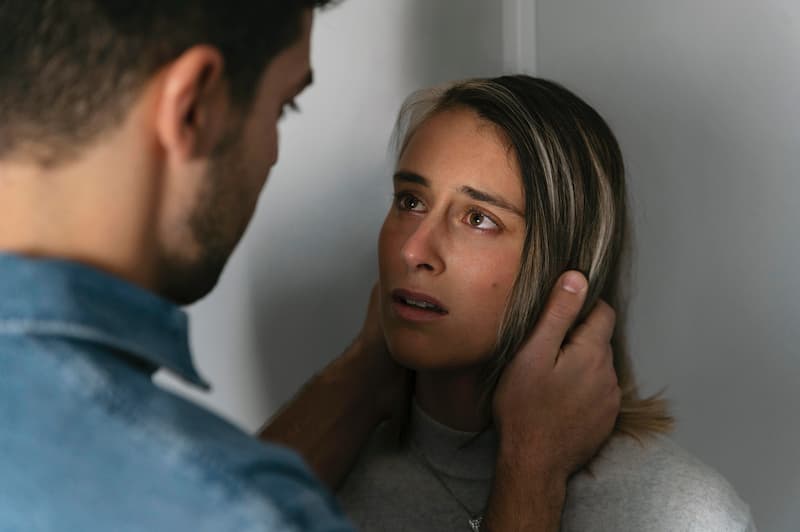
Gender violence can leave psychological after-effects that last for years: post-traumatic stress, anxiety, depression, sleep problems, guilt and low self-esteem, as noted by the World Health Organization. These after-effects carry weight as evidence in criminal proceedings and are compensated as non-pecuniary damage (daño moral). In the Valencian Region (Comunitat Valenciana) you can receive free psychological support at the 24-hour Women’s Centres (Centros Mujer 24 Horas, 900 580 888) and through 016.
Many women who have left a violent relationship are surprised that, months or years later, they still feel afraid, have nightmares or find it hard to trust others. This is not weakness or a lack of willpower: these are known, documented consequences of having lived through violence. This article does not replace an assessment by a health professional, but it will help you understand what may be happening, how it is taken into account at trial and where to get help free of charge.
Documented psychological effects
In its fact sheet on violence against women (updated in June 2026), the World Health Organization states that this violence causes depression, post-traumatic stress and other anxiety disorders, sleep difficulties and alcohol use disorders, among other health problems. It adds that intimate partner violence is the fourth leading cause of health loss among women, according to 2025 estimates.
In practice, the most commonly observed after-effects are:
- Post-traumatic stress: intrusive memories, nightmares, being easily startled, avoiding places or people that are reminders of the violence, and a constant state of alert.
- Anxiety, sometimes with panic attacks, and a permanent sense of threat, even when the abuser is no longer nearby.
- Depression: persistent sadness, loss of interest, tiredness, isolation.
- Sleep disorders and difficulties with concentration and memory.
- Guilt and shame, often fuelled by the abuser during the relationship, for example through gaslighting.
- Low self-esteem and emotional dependency, which make it harder to take decisions or build new relationships.
- Physical symptoms with no clear organic cause: headaches, digestive problems, muscle tension.
Where the violence has been prolonged, the WHO International Classification of Diseases (ICD-11) also recognises complex post-traumatic stress disorder, which adds persistent difficulties in regulating emotions, a very negative view of oneself and problems in relationships. Only a professional can assess whether it applies in each case.
Important: if you recognise yourself in these symptoms, you do not need a diagnosis to ask for help. Talk to your GP, call 016 (24-hour psychosocial support) or the 24-hour Women’s Centre. If at any point you feel you cannot cope any more, call 112.
“Battered woman syndrome”
This is a concept described by the American psychologist Lenore Walker in the late 1970s to explain why many women stay in violent relationships: the cycle of tension, assault and remorse, learned helplessness and fear. It is not an official diagnosis in the clinical manuals, but it remains useful for understanding behaviour that is often misread from the outside, such as going back to the abuser, withdrawing a complaint or playing down what happened.
The evidential value of psychological after-effects
After-effects are not only a health matter: in criminal proceedings they serve several purposes.
They corroborate your testimony
In many cases there are no direct witnesses. A clinical or expert report describing symptoms consistent with your account is an objective element that strengthens the credibility of your statement. It also helps to explain to the court why you took time to report, why there are gaps in your account or why you retracted at some point.
They may constitute the offence itself
- Causing psychological harm to a woman who is or was a partner is an offence (art. 153.1 of the Criminal Code, CP).
- Habitual psychological violence is punished as habitual abuse (art. 173.2 CP).
- If the after-effect requires medical or psychological treatment, there may be an offence of causing injury (lesiones, art. 147 CP).
We explain this in detail in psychological abuse: legal consequences and how to prove it.
What evidence is used
- Medical records from primary care and mental health services: appointments, diagnoses, sick leave and treatment.
- Reports from the specialist services that have supported you, such as the Women’s Centres.
- Forensic assessment: the court may commission it from the Comprehensive Forensic Assessment Units (Unidades de Valoración Forense Integral) of the Institutes of Legal Medicine, which also assess daughters and sons.
- Private psychological expert report, prepared by an independent forensic psychologist at your lawyer’s request.
That is why it is advisable to see a doctor and keep the reports from the outset, even if you have not yet decided to report. More tips in our evidence guide for victims of gender violence.
Compensation for non-pecuniary damage and after-effects
Anyone convicted of an offence must make good the harm caused. Article 113 of the Criminal Code (Código Penal) provides that compensation covers both material and non-pecuniary losses. In gender violence cases, the following are usually claimed:
| Head of claim | What it includes |
|---|---|
| Non-pecuniary damage | The suffering, fear and distress experienced, even if there is no diagnosed disorder. |
| Psychological injury | The time it takes for the disorder to heal, with or without sick leave. |
| After-effects | The psychological effects that remain once the condition has stabilised. |
| Expenses | Private psychological or psychiatric treatment, medication and other proven expenses. |
To quantify injuries and after-effects, the courts usually use the damage assessment scale in Law 35/2015 as a guideline, although they are not obliged to apply it outside road traffic accidents. In cases of sexual violence, article 53 of Organic Law 10/2022 requires compensation to cover, at the very least, physical and psychological harm, including non-pecuniary damage, loss of opportunities, material damage, social harm and therapeutic treatment.
Good expert evidence makes all the difference: without it, non-pecuniary damage is usually set at generic amounts. If you also need financial support while you recover, see financial aid for victims of gender violence.
Free psychological support services
Organic Law 1/2004 recognises the right of victims of gender violence to comprehensive support that expressly includes psychological support (art. 19). These are the main services in Alicante:
- 016: immediate, free and confidential psychosocial support 24 hours a day, by phone, WhatsApp (600 000 016), chat or email (016-online@igualdad.gob.es). It leaves no trace on your bill, although the call may appear in your phone’s call log.
- Alicante 24-hour Women’s Centre (Generalitat Valenciana): calle García Andreu, 12. A team of psychologists, social workers and lawyers providing free individual and group support every day of the year. Telephone 900 580 888.
- Alicante 24-hour Crisis Centre (Centro de Crisis 24 horas), for victims of sexual violence outside a relationship, even if it happened years ago: calle General Pintós, 21. Telephone 900 22 00 22.
- Crime Victim Support Office (Oficina de Asistencia a las Víctimas del Delito) in the court buildings, which provides information and guidance during the proceedings.
- Public health system: your GP can refer you to mental health services.
Frequently asked questions
How long do the psychological effects of gender violence last?
It depends on each person, on how long and how serious the violence was and on the support received. Some women improve within months; for others, symptoms such as anxiety, insomnia or hypervigilance persist for years, especially without treatment. Specialist psychological support and a stable support network help recovery. Only a professional can assess your particular situation.
Do I need a psychological report to report the abuse?
No. You can report without any prior report. However, medical and psychological reports are very valuable evidence to prove the harm, corroborate your account and claim compensation. During the proceedings, the court may commission a forensic assessment and your lawyer may propose a private psychological expert report.
Can I claim compensation for psychological harm even if there was no physical violence?
Yes. Article 113 of the Criminal Code includes non-pecuniary losses in the civil liability arising from the offence. If psychological violence is proved and there is a conviction, the victim can be compensated for non-pecuniary damage, psychological injury, after-effects and treatment costs. Having reports and a solid expert opinion makes it possible to quantify that harm more accurately.
Where can I get free psychological support in Alicante?
At the Generalitat Valenciana’s 24-hour Women’s Centre, calle García Andreu, 12 (telephone 900 580 888), which is open every day of the year. Also through 016, through your health centre and, if you have suffered sexual violence outside a relationship, at the 24-hour Crisis Centre (900 22 00 22). All of them are free.
Your recovery matters as much as the court case, and the two can go hand in hand. Celeste Pérez Bleda helps you gather the right reports and claim the compensation you are entitled to through her service defending women who are victims of gender violence, and in divorces involving gender violence. If you need to, you can call 607 449 491, available 24 hours a day.
Legal basis and sources
- World Health Organization: fact sheet on violence against women (in Spanish)
- Criminal Code (arts. 113, 147, 153 and 173), consolidated text (BOE, in Spanish)
- Organic Law 1/2004 on Comprehensive Protection Measures against Gender Violence (art. 19) (BOE, in Spanish)
- Organic Law 10/2022 on the comprehensive guarantee of sexual freedom (arts. 47 and 53) (BOE, in Spanish)
- Law 35/2015 reforming the system for assessing damage in road traffic accidents (BOE, in Spanish)
- Generalitat Valenciana: 24-hour Women’s Centres (in Spanish)
- Generalitat Valenciana: 24-hour Crisis Centres (in Spanish)
- La Moncloa: the 016 helpline, what it is and how it works (in Spanish)